
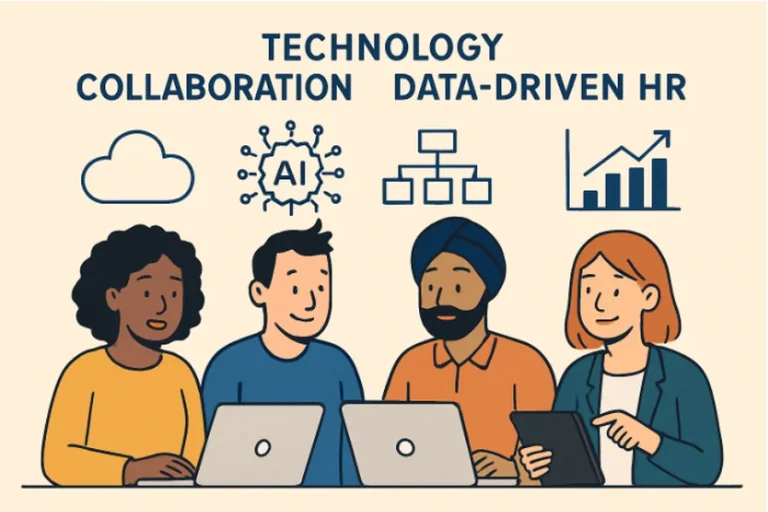
Workplaces are evolving at an unprecedented pace due to globalization, economic pressures, and technological breakthroughs. To stay ahead, organizations must be adaptable and proactive, leveraging up-to-date strategies in payroll and human resources (HR) that not only address today’s challenges but also anticipate tomorrow’s opportunities. From integrating advanced digital tools to nurturing a highly skilled and engaged workforce, preparing for the future requires a mix of innovation, foresight, and a commitment to continual improvement. Partnering with this payroll services provider or adopting modern payroll services can help streamline administrative functions, reduce compliance risk, and relieve managers of repetitive duties, allowing them to redirect their energy toward strategic initiatives and employee engagement.
As automation and artificial intelligence (AI) reshape core HR processes, it’s crucial for leadership to anticipate both the opportunities these technologies create and the challenges they may pose to workforce morale, skills relevance, and organizational agility. Prioritizing transparent communication, investing in employee well-being, promoting digital readiness, and embracing robust HR solutions are foundational steps to creating a resilient, future-ready team. By remaining informed, agile, and responsive, organizations can successfully navigate evolving industry standards while unlocking new avenues for productivity, innovation, and sustainable growth in a rapidly shifting business landscape.
Embracing AI and Automation in HR
The integration of AI and automation into HR functions has fundamentally transformed traditional workflows in recent years and continues to create new opportunities for forward-looking organizations. AI-powered platforms can now automate a wide range of repetitive, time-consuming tasks, including candidate screening, interview scheduling, onboarding, payroll processing, and benefits administration. This not only leads to greater efficiency and reduced human error but also enables HR professionals to provide faster, more accurate, and more personalized services to employees.
For example, AI-driven recruiting tools can sift through thousands of resumes in moments, shortlisting candidates who best match job specifications, thus accelerating hiring while ensuring a higher-quality fit between candidates and roles. Automation of payroll and compliance tasks, on the other hand, helps reduce costly mistakes and frees up HR’s capacity for high-value strategic work. Organizations that integrate AI effectively into their HR processes report significant improvements in operational performance, employee satisfaction, and data-driven decision-making. This technology also makes it easier to gather insights from data that can guide leadership in fine-tuning people strategies for the future.
Enhancing Employee Well-being in the Age of AI
While AI brings remarkable advancements, it also prompts real concerns among employees regarding job security, fairness, workload balancing, and workplace dynamics. Rapid changes, if not managed thoughtfully, can lead to anxiety or resistance within the workforce. Maintaining open channels of communication about the role of AI is therefore essential not only to ensure transparency but also to nurture trust and a sense of psychological safety in the workplace.
Organizations should provide ongoing guidance to employees navigating these technological changes, including clear policies on how AI will be used, opportunities for employee feedback, and access to support resources such as counseling and mental health services. These resources can help staff adapt to new expectations and cope with any uncertainty. Moreover, emphasizing that technology is designed to augment, rather than replace, human skills is vital to employee morale. Regular feedback sessions, workshops, and transparent communication can ensure that employees feel valued, heard, and actively involved in the transition. According to Forbes, companies prioritizing employee well-being and clear communication during AI adoption ultimately build more resilient, engaged, and adaptable workforces.
Adopting Cloud-Based Payroll Systems
Cloud-based payroll solutions have become an essential component for any business aiming to remain agile and responsive in a competitive marketplace. Unlike traditional payroll tools, cloud-based systems offer superior scalability, making it easy to adjust payroll operations as organizations grow, enter new markets, or face regulatory changes. Their built-in compliance features can help HR teams stay up to date with evolving labor laws and tax regulations at the local, national, and even global levels.
Offering real-time access to payroll and benefits data, these systems enhance transparency and empower employees through self-service portals where individuals can view pay stubs, update personal information, or manage benefit selections without requiring constant HR involvement. This self-service capability not only improves employee satisfaction but also dramatically reduces administrative overhead and the risk of errors. Additionally, cloud platforms integrate seamlessly with other business apps, supporting holistic HR, finance, and analytics processes. With better data visibility and automation, HR professionals can focus on strategic goals such as organizational growth, talent retention, and process optimization.
Prioritizing Employee Upskilling and Reskilling
As technological advancements disrupt existing roles and redefine required skills, continuous upskilling and reskilling have become imperative for workforce relevance and organizational competitiveness. By actively investing in training that emphasizes digital literacy, data analysis, emerging tech, and critical soft skills, companies can close skill gaps and ensure their teams remain future-ready.
Effective upskilling programs are not one-size-fits-all; leading employers tailor learning opportunities to various talent segments, making education accessible through online platforms, workshops, or peer mentoring. These initiatives boost retention, improve employee satisfaction, and foster a culture of lifelong learning, critical for weathering business disruptions sparked by market downturns, shifting consumer demands, or emerging technologies.
Implementing Agile Workforce Planning
Organizations must continuously align their workforce with evolving business priorities by adopting agile planning techniques. Agile workforce planning involves actively developing internal talent pools, cross-training employees, quickly reallocating staff to projects that have immediate strategic value, and using flexible staffing models, including part-time or contingent workers, to adapt to fluctuating demand.
This heightened flexibility enables organizations not only to address skill shortfalls in real time but also to respond nimbly to economic shifts and sudden market changes, thereby enhancing operational resiliency and workforce morale.
Benefits of Agile Workforce Planning
- Rapid adaptation to changing business conditions
- Optimized resource allocation that ensures the right skills are available when needed
- Improved talent engagement and higher retention by offering employees diverse roles and growth opportunities
Fostering a Culture of Continuous Learning
Organizations that cultivate a culture of continuous learning stand out as innovation leaders. By encouraging employees to proactively pursue professional development through access to e-learning platforms, industry conferences, workshops, or in-house mentorship programs, businesses can ensure their teams stay ahead of the latest trends and technologies. Such a culture not only enables staff to acquire new knowledge but also inspires creativity, fuels engagement, and strengthens internal mobility, as employees feel empowered to chart their own career trajectories within the company.
Furthermore, leaders who support and model a growth mindset inspire employees to embrace change, take calculated risks, and develop new capabilities, making the organization as a whole more adaptable to future disruptions and opportunities.
Leveraging Data Analytics for Strategic Insights
Strategic decision-making in payroll and HR has been revolutionized by advanced data analytics. By capturing, organizing, and analyzing workforce metrics, organizations can uncover actionable insights into employee performance trends, absenteeism, compensation benchmarks, and skill gaps. These analytics enable leaders to track progress toward key goals, predict future workforce needs, and develop targeted interventions for retention or recruitment.
Analytics-driven processes also enhance transparency and build trust across the workforce, as employees can see how decisions are informed by fair, objective data rather than subjective judgment. Businesses making data-driven choices tend to be more agile, able to course-correct in real time, and better equipped to create an environment where both employees and the organization thrive. As competition intensifies, companies that harness workforce analytics effectively will lead the way in productivity, innovation, and employee satisfaction.
Conclusion
Adapting to future shifts in payroll and human resources requires a holistic, strategic approach that integrates AI and automation, prioritizes employee well-being, adopts scalable, cloud-based solutions, and continually invests in upskilling. By fostering a culture of learning and harnessing the power of data and agile planning, companies can not only overcome emerging challenges but also drive transformative growth. Embracing these strategies positions organizations to succeed amidst rapid technological evolution and creates a resilient, future-ready workforce prepared for whatever lies ahead.