
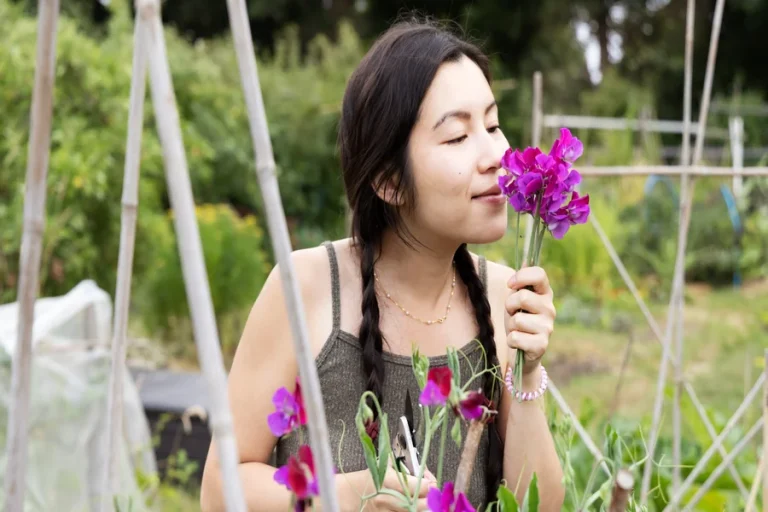
Fresh flowers do something artificial scenting products can’t: they create an emotional response that keeps customers staying longer, exploring more, and coming back. After working with Edmonton businesses on floral design for years, I’ve seen firsthand how a well-placed arrangement of lilacs or sweet peas can shift the entire feel of a space in minutes.
This guide covers how to do it well — from selecting the right blooms to placing them strategically — without over-scenting your space or burning through your budget.
Why Does Flower Fragrance Affect Customer Behaviour?
Scent is processed differently than sight or sound. Fragrance molecules bypass conscious filters and connect directly to the brain’s emotional memory centers, which means customers form stronger associations with pleasant-smelling environments — and remember them longer.
Research in retail environments consistently shows that natural fragrance increases average customer dwell time. Longer dwell time correlates directly with higher transaction values and better conversion rates. The effect compounds over time: customers who associate a pleasant scent with your business are more likely to return and refer others.
The key word is natural. Artificial diffusers and synthetic fragrances trigger different responses than fresh flowers. They’re also harder to control for intensity, which leads to the most common scenting mistake: overwhelming the space.
Which Flowers Actually Produce Reliable Fragrance?
Not all flowers are equally fragrant, and fragrance output changes throughout a bloom’s lifecycle. Understanding this prevents you from paying for arrangements that don’t deliver the scent you’re expecting.
Prairie roses reach peak fragrance intensity around day three in water. Eucalyptus provides steady, consistent scent output for up to 14 days when stems are trimmed every third day. Stock, sweet william, and lightly scented garden roses are reliable mid-range options that hold fragrance for seven to ten days with regular water changes.
High-intensity options like gardenias, tuberose, and oriental lilies are best reserved for lower-traffic environments. In a busy retail setting, these can quickly tip from pleasant to overwhelming — especially for fragrance-sensitive customers.
For Edmonton businesses specifically, local seasonal varieties add something worth noting: the emotional response Alberta customers have to fresh lilac or sweet peas after a long winter is genuinely different from how those same scents land in warmer climates. That seasonal contrast is an asset worth using.
How Do You Assess Your Space Before You Start?
Skipping a proper space assessment is where most floral scenting programs go wrong. Fragrance behaves differently depending on room size, ceiling height, airflow from HVAC vents, and existing odors from cleaning products or adjacent businesses.
Before placing any arrangements, measure your room dimensions and walk the natural customer route through your space. Note where air circulates from vents and doorways — these are your distribution channels. Identify any competing odors that need to be addressed first. Placing activated charcoal bags in problem areas 48 hours before your first installation gives you a clean baseline.
As a general starting point, three small arrangements per 1,000 square feet is conservative enough to avoid over-scenting while still creating noticeable fragrance zones. Each arrangement will produce a natural scent radius of roughly 10 to 15 feet, so position them along customer movement routes rather than bunching them together.
Where Should You Place Arrangements for Maximum Effect?
Placement matters as much as flower selection. The goal is even distribution along the path your customers actually travel — not a single large display in one corner.
Entrances work well with lighter, welcoming scents like sweet alyssum or lightly scented roses. These create a positive first impression without committing customers to a strong fragrance before they’ve decided to stay. Waiting areas benefit from calming options like lavender, which research suggests reduces perceived wait times. Checkout counters and service desks are strong placement points because customers spend stationary time there — long enough for fragrance to register and form a brand association.
Avoid placing strongly scented arrangements near HVAC return vents, which will pull fragrance out of the space faster than it can build, and near food preparation or display areas where competing smells create confusion rather than comfort.
How Do You Keep Fragrance Consistent Without Constant Replacement?
A maintenance schedule is non-negotiable. Wilting flowers produce bacterial growth and decomposition odors that override any remaining pleasant fragrance — and leave a worse impression than having no flowers at all.
The baseline protocol for most arrangements is fresh water every two days, stem trimming every three days, and full replacement after ten days maximum. Hardy options like alstroemeria, stock, and eucalyptus can stretch closer to the ten-day mark. Delicate high-fragrance blooms like gardenias or tuberose may need replacement at five to seven days depending on room temperature and humidity.
Edmonton’s winter months actually work in your favour here. Cooler ambient temperatures slow bacterial growth and extend arrangement longevity compared to summer setups, so your replacement schedule can flex slightly across seasons.
What Should You Track to Know if It’s Working?
Start by establishing a baseline before your first installation. Track customer dwell time through observation or point-of-sale data, average transaction value, and conversion rate from browsers to buyers.
Survey customers informally — or through a short feedback form — about their overall experience of the space. Ask about atmosphere and comfort rather than asking directly about fragrance, which can skew responses. Meaningful improvement typically becomes visible within 60 days of consistent implementation.
If numbers aren’t moving, reassess fragrance intensity first. Most programs that underperform are either too subtle to register or too strong and actively driving people away. Customer feedback is the most reliable calibration tool.
Getting Started With the Right Flowers
Working with a local florist who understands both floral conditioning and your space requirements makes the implementation significantly smoother. Properly conditioned flowers — rehydrated on arrival and given the right specialized flower food for each variety — last noticeably longer and hold fragrance better than flowers that haven’t been prepped correctly.
For Edmonton businesses, Edmonton flowers from Cerise Floral are conditioned using that approach: each stem is rehydrated on arrival and given variety-specific flower food to maximize longevity and fragrance output. It’s the kind of care that makes a measurable difference when you’re counting on arrangements to perform in a customer-facing environment.
Start conservatively, track what’s working, and adjust based on real customer responses rather than guesswork. The businesses that get the most out of floral scenting are the ones that treat it as an ongoing program rather than a one-time decoration decision.