
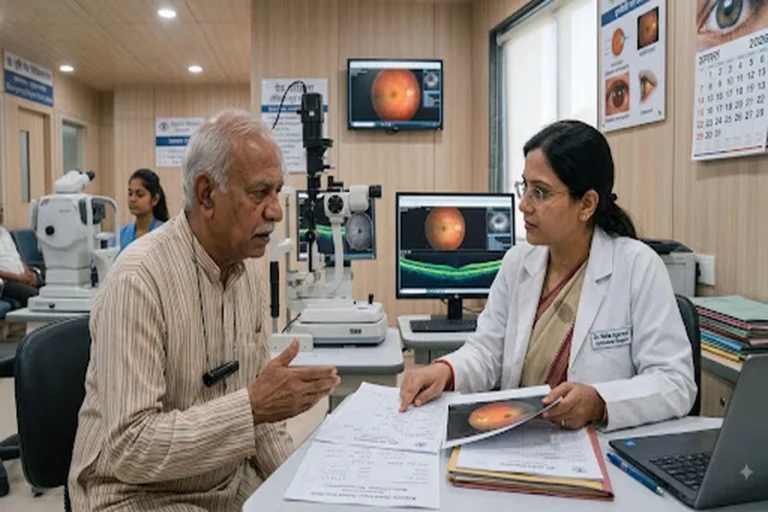
Medical history gives an eye specialist important context before treatment is planned. Eye symptoms do not always exist in isolation. Existing illnesses, medicines, previous eye conditions and earlier treatments can impact what the doctor recommends.
A complete history helps connect the current eye problem with the patient’s wider health and supports a safer, more suitable treatment plan.
1. Helps Identify Health Conditions That Affect the Eyes
Conditions such as diabetes, hypertension and autoimmune disorders can affect eye health over time. Knowing about these conditions helps the eye doctor understand whether an eye problem may be linked to a wider medical issue.
This information can also impact how closely the eyes need to be monitored and which tests may be useful before treatment begins.
2. Assists the Doctor in Reviewing Current Medicines
Medicines can be relevant when an ophthalmologist plans treatment. The doctor needs to know what the patient is already taking, including prescribed medicines and eye drops.
This helps avoid unnecessary duplication and gives the doctor a better understanding of the patient’s current medication use before recommending another medicine, changing an existing treatment or planning a procedure.
3. Shows Previous Eye Problems and Treatments
Past eye conditions can affect present treatment decisions. Previous infections, injuries, surgeries, laser procedures, prescriptions or long-term eye problems may provide useful clues.
When the eye specialist knows what has already been diagnosed or treated, it becomes easier to understand whether the current problem is new, recurring or related to an earlier condition.
4. Helps Explain Changes in Vision
A clear history of vision changes helps the doctor understand how the problem has developed. The patient may be asked when symptoms started, whether they have become worse and if one or both eyes are affected.
Previous eye examination records can also help show whether vision has changed gradually or within a shorter period.
5. Helps Choose a Suitable Treatment
Treatment depends on the diagnosis, present health status and severity of the condition. Medical history helps the doctor consider these factors together.
Based on the findings, treatment may involve glasses, medicines, eye drops, monitoring, laser treatment or surgery. The decision is more informed when the doctor understands the patient’s overall medical and eye history.
6. Supports Follow-up Decisions
Medical history remains useful after treatment starts. During follow-up visits, the doctor can compare current findings with earlier symptoms, test results and treatment details.
This helps assess whether the condition is stable, improving or needs a change in management. It also supports consistent eye care over time and guides future treatment decisions effectively.
Final Thoughts
Medical history is important because it gives the eye specialist a complete picture before treatment is planned. It helps the doctor understand health conditions, medicines, previous eye problems and changes in vision.
Sharing accurate information allows treatment decisions to be based on both the current examination and the patient’s wider health needs. It can help guide monitoring and future treatment when the patient’s condition changes over time.


