
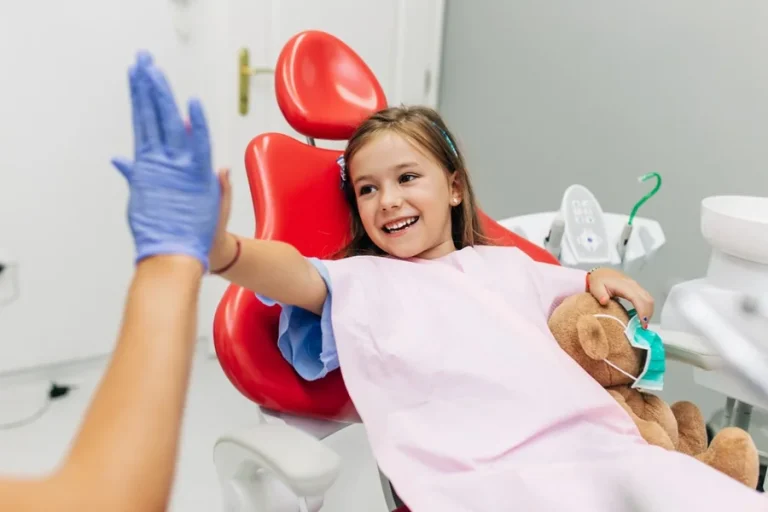
Dental visits can scare kids. The bright lights. The loud tools. The strange chair. You see the worry on your child’s face and feel your own stomach twist. You want to protect them, but you also know their teeth need care. Good news. You are not stuck. Family dentists use clear, simple strategies that calm fear and build trust. They speak in kid friendly words. They turn the visit into a small routine, not a surprise. They give your child control in small ways, so the chair does not feel like a trap. Pasadena family dental teams use these same tools every day with nervous kids. This blog will walk through five strategies you can expect at a family office. You will see how these steps ease tension, prevent tears, and help your child leave the chair feeling safe and proud.
1. Use kid friendly words and clear stories
Your child does not fear teeth cleaning. Your child fears the unknown. Simple words and clear stories cut through that fear.
Family dentists often:
- Use words like “sugar bugs” instead of “bacteria”
- Say “tooth counter” instead of “explorer tool”
- Describe numbness as a “sleepy tooth”
Next, they tell a short story about what will happen. They often break it into three steps. First, they look. Second, they clean. Third, they protect with fluoride. The story gives your child a mental script. That script replaces wild guesses with clear steps.
You can support this at home. You can read a short dental storybook. You can play “dentist” with a stuffed toy. You can let your child practice opening wide in a mirror. These small steps teach the same message. The visit has a start, a middle, and an end.
2. Give kids choices and shared control
Anxiety grows when your child feels trapped. Control shrinks that fear. Family dentists use choices to return a sense of power.
Common options include:
- Picking the toothpaste flavor
- Choosing a toy at the end of the visit
- Deciding if they want the dentist to count teeth out loud
Many dentists also set up a simple hand signal. Your child raises a hand if they need a pause. That signal works like a safety brake. Your child knows they can stop for a breath or a sip of water. Anxiety drops when your child trusts that adults will honor that signal.
You can practice this before the visit. You can agree on the same hand signal at home. You can use it during tooth brushing practice. This shows your child that their voice matters.
3. Use “tell show do” and gentle exposure
Family dentists often use a three step method called “tell show do.” It is simple and grounded in child learning research.
- Tell. They explain the step in short words. “I will count your teeth.”
- Show. They show the mirror on your child’s hand or fingernail.
- Do. They repeat the step in the mouth.
This pattern builds trust. Your child learns that nothing happens without warning. They see that tools are not weapons. They are just objects with a clear job.
The same idea appears in guidance from the American Dental Association, which supports gradual exposure and clear communication for anxious kids.
You can copy this at home. You can tell, show, and then brush. First, say what you will do. Next, show the brush on your child’s hand. Then, brush one small spot. Short practice sessions three times often work better than one long struggle.
4. Shape the office into a calm space
The room can either trigger fear or offer comfort. Family dentists pay attention to what your child sees, hears, and feels.
Many offices:
- Use soft colors and simple shapes
- Play calm music or quiet cartoons
- Offer blankets, sunglasses, or small toys to hold
Some dentists use distraction. They may ask your child about school. They may use a “count to ten” game. They may let your child watch a show during cleaning. Distraction does not hide the truth. It simply gives the brain something safer to hold.
Research from the National Institutes of Health shows that distraction, child friendly settings, and clear communication reduce dental fear in kids and improve cooperation.
5. Plan visits early, often, and with steady routines
Fear grows in silence. Regular visits shrink that fear. When you start early, the dentist becomes a normal part of life.
Most experts suggest:
- First visit by age 1 or within 6 months after the first tooth
- Checkups every 6 months, or as your dentist advises
- Short visits that focus on comfort, not just treatment
Routine visits mean fewer painful problems. That means fewer shots, fewer extractions, and fewer emergencies. Each calm visit becomes proof that your child can handle the chair.
You can support this with a simple home routine. You can set a “tooth timer” twice a day. You can use the same song during brushing. You can mark dental visits on a calendar so they never feel like a surprise.
Comparison of common strategies for dental anxiety in kids
| Strategy | Main goal | What the dentist does | What you can do at home
|
|---|---|---|---|
| Kid friendly words | Reduce fear of the unknown | Use simple terms and short stories | Use the same words during brushing |
| Choices and hand signals | Give your child control | Offer options and honor pause signals | Practice the same signal in daily brushing |
| Tell show do | Build trust step by step | Explain, show on hand, then treat | Copy the pattern during home care |
| Calm setting and distraction | Shift focus away from fear | Use calm decor, music, and small toys | Bring a comfort item and agree on a song or story |
| Regular visits and routines | Make dental care feel normal | Schedule steady checkups | Keep a fixed brushing schedule and mark visits on a calendar |
How you and the dentist work together
You do not face your child’s dental anxiety alone. You and the dentist form a small team. You bring your knowledge of your child. The dentist brings training and calm practice.
Before the visit, you can call the office. You can share what worries your child. You can ask what comfort options they offer. During the visit, you can stay steady and quiet. Your calm tone can anchor your child more than any toy.
After the visit, you can praise effort, not “bravery.” You can say, “You opened your mouth three times. You kept going even when you felt scared.” That kind of praise helps your child see progress. Progress builds real courage.
With time, clear words, shared control, and steady routines, dental visits can move from a source of dread to a simple part of your child’s health story.


