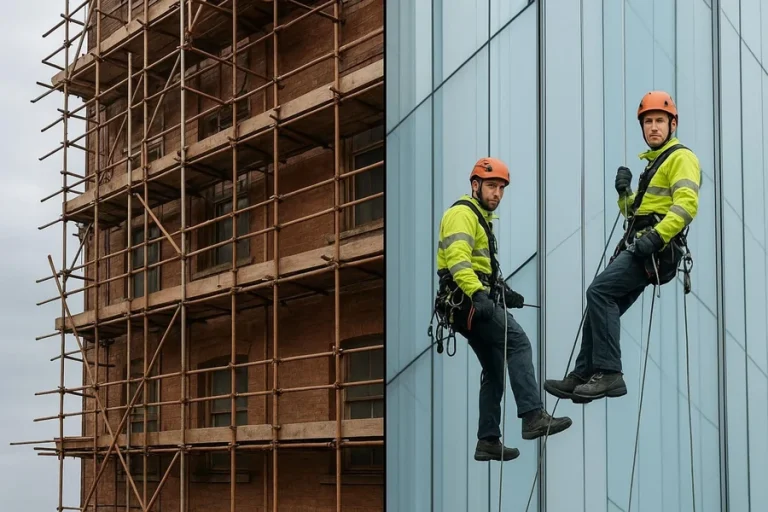
Working high up on a building for construction, maintenance, or inspections usually comes down to two main options: traditional scaffolding or rope access. Scaffolding has been the standard choice for a long time, but many modern jobs show clear benefits to using rope access instead. Rope access is often faster, costs less, has strong safety rules, and causes less disruption on site. For companies that need skilled work at height, especially where speed and flexibility matter, professional rope access services in London and other areas can be a practical alternative to large scaffold systems.
What Is the Difference Between Rope Access and Traditional Scaffolding?
The difference is simple. Traditional scaffolding is a temporary structure built from the ground up, usually using metal. It creates a wide platform that supports workers, tools, and materials. People reach the work area by climbing or walking on the scaffold. On bigger jobs, the scaffold can cover a large part of the building for weeks.
Rope access works in a different way. Trained technicians use ropes, harnesses, and safety equipment to reach areas that are high up or hard to reach. They often work by going down from the top of the building (abseiling) or moving up using ropes. A key part of rope access is a two-rope safety system: one main working rope and one separate backup rope. This gives workers more freedom to move and lets them reach spots that would be awkward with scaffolding.
Which Situations Are Best for Each Method?
The best option depends on what the job needs.
Rope access is a strong choice when the work needs to be done quickly and with little equipment on the ground. It suits jobs such as:
- Building facade inspections
- Maintenance work on tall buildings
- Repairs in hard-to-reach areas
- Short jobs and urgent call-outs
- Work in places where cranes are not possible or space is tight
For example, a quick window repair on a high floor or checking a detailed feature on a building front is often easier with rope access.
Scaffolding is usually better for bigger jobs that need a wide platform for a long time. It works well when you need:
- Many workers using the same area at once
- Space to store materials at height
- Heavy tools and long-term access
- Large areas for painting, brickwork, or major repairs
It gives a fixed work surface that can handle heavy loads and support work over weeks or months.
Key Benefits of Rope Access Over Traditional Scaffolding
Rope access can bring real gains in time, cost, and day-to-day site efficiency. For many jobs, it is more than a backup plan-it is often the smarter option.
Faster Setup and Project Completion
Rope access is much faster to set up than scaffolding. Scaffolding needs planning, delivery, build time, and then removal at the end. On tall or complex buildings, this can take days or even weeks, which adds extra labour cost.
For scaffolds over 125 feet, OSHA requires an engineered and stamped drawing. That can add extra time and a typical cost of $1,500-$2,500 before work starts.
Rope access can often be set up in minutes or a few hours. Once ropes are rigged, technicians can start work right away. Packing up is also quick, which helps the site return to normal sooner. This is useful for tight deadlines and urgent repairs, and it can reduce downtime for the building.
Lower Costs and Budget Efficiency
Rope access is often cheaper than scaffolding because it uses less equipment and usually fewer people. There is no large scaffold to transport, build, and remove. Scaffolding also often has minimum hire periods (often 28 days), even if the job only takes a short time. Rope access avoids that problem, so it can be a better fit for short jobs.
Many rope access projects save around 30% to 70% compared with scaffolding. Another cost benefit is that rope access technicians are often multi-skilled and trade-qualified, so fewer separate contractors may be needed.
Minimal Disruption to Operations
Scaffolding is large and hard to hide. It can block entrances, paths, windows, and views. It may also affect privacy for people inside the building. The noise from building and removing scaffold can also disturb nearby businesses or residents.
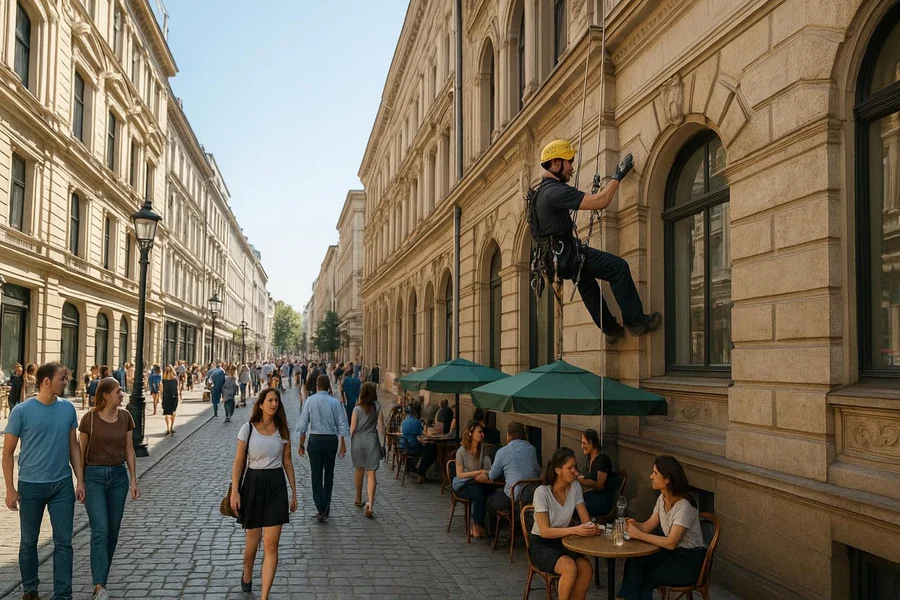
Rope access usually creates much less disturbance. Technicians often work from the top down, and most of the ground area stays clear. The equipment is light and does not need a big space around the building. This makes rope access a good option for:
- Office and retail buildings
- Schools and hospitals
- Apartment blocks and residential sites
Work can continue with fewer interruptions.
Improved Access to Confined or Difficult Spaces
Some buildings have shapes that are hard to reach with scaffolding, such as steep angles, roof edges, domes, ledges, or detailed outer walls. Tight spaces can also make scaffolding difficult or impossible to build.
Rope access is well suited to these areas. Technicians from Rope Access in London can move across facades and reach awkward spots without needing much space at ground level. This is useful in busy city streets and on offshore structures. Sometimes rope access is not just better-it may be the only workable way to reach the area.
Ideal Choice for High-Rise and Complex Structures
On very tall buildings, scaffolding can become extremely expensive and slow. It can also block windows, entrances, and views for a long time, which can cause complaints and reduce the building’s appeal.
Rope access gives a cleaner option for high-rise inspections and maintenance. Workers can reach different levels without covering the building or blocking light. For tall buildings where a full scaffold would be a major headache, rope access is often the easiest way to get work done quietly and quickly.
Stronger Safety Standards and Better Safety Records
Many people assume rope access is more dangerous, but the numbers often show the opposite. Rope access can have lower accident rates than scaffolding. This is linked to strict training and clear safety rules.
Rope access technicians complete detailed training that often goes beyond what scaffold workers need. Training covers safe working methods, correct use of equipment, and rescue plans.
A main safety feature is the two-rope system:
- Main working rope
- Separate backup rope (used if the first line fails)
Tools and equipment are also tied off to stop items falling. This is a major safety point for people below. Industry bodies such as IRATA (Industrial Rope Access Trade Association) and SPRAT (Society of Professional Rope Access Technicians) set high standards and certify technicians.
Reduced Environmental Impact
Rope access uses fewer materials than scaffolding, which can mean less waste on site. It also usually needs less heavy machinery and can be quieter overall.
Scaffolding materials like steel, aluminium, and wood take energy and resources to produce and transport. Even when they are reused or recycled, the overall impact can still be large. Rope access reduces the need for these materials, which can make it a better choice for organisations that want to reduce their environmental footprint.
Safety Considerations for Rope Access and Scaffolding
Both methods aim to keep people safe, but they do it in different ways. Scaffolding creates a physical structure between the work area and the public. Many sites use crash decks or blocked-off zones to protect pedestrians from falling debris. This is especially useful in busy areas, but the large amount of equipment can also create hazards at ground level.
Rope access depends on strong safety routines, full equipment checks, trained staff, and backup systems. Areas below still need to be blocked off, but the smaller setup and focused work area can reduce how long the public is exposed to risk.
Is Rope Access Safer Than Scaffolding?
In many cases, yes-rope access often shows fewer recorded injuries than scaffolding. This is linked to strict procedures and certification systems. Technicians are trained and certified through bodies like IRATA and SPRAT, which helps keep standards high across the industry.
The two-rope system means the worker is always connected to both a working line and a backup line. Tool tethering also reduces the risk of dropped items. When rope access is done correctly, it can improve safety by reducing time spent at height, cutting down clutter, and limiting busy work areas.
Potential Limitations and When Scaffolding Is Still Useful
No access method works best for every job. Many sites use a mix of options based on the building, the work type, the risks, and how long the job will take.
Scaffolding still has an important place. It is a strong, reliable platform for long jobs. If the work needs many people in one area, or heavy materials stored at height for long periods, scaffolding can be the better choice. For construction or renovation projects that last months, scaffolding can provide steady, wide access and support large loads.
When Is Rope Access Not Appropriate?
Rope access is flexible, but it is not always the right fit.
- Work needing a very stable, long-use platform: Some repairs take a long time and require a wide platform for best results (for example, installing a lead watergate compared with a quick cement skew replacement). Scaffolding can support careful, slow work better in these cases.
- Very long projects with many trades: If several teams need daily access for weeks or months, plus storage space at height, scaffolding may be more practical.
- High debris risk needing full containment: If the site needs full crash decks, netting, and strong barriers to protect the public, scaffolding may be the safest choice.
The final choice comes down to the job details, the budget, and what result you need. Scaffolding still has clear uses, but rope access has become a smarter, faster, and often more sustainable option for many types of work at height. It reduces wasted time and materials, supports safer planning, and helps building owners manage inspections and maintenance with better control and less disruption.