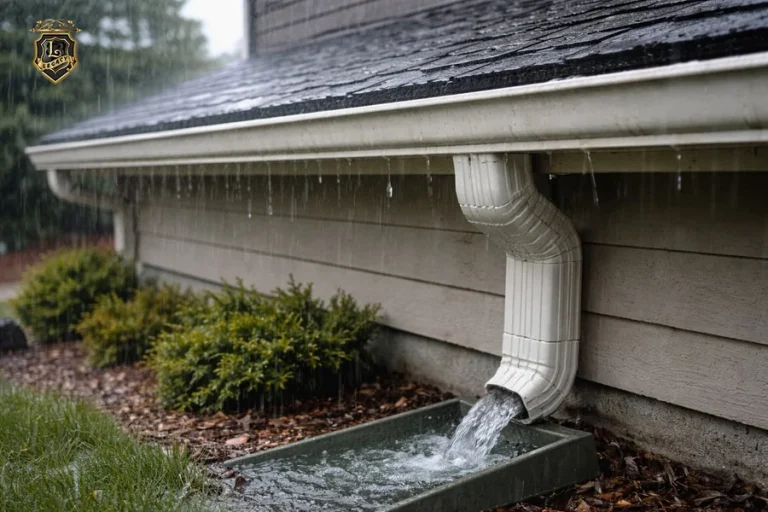
Monsoon storms can drop heavy rain quickly, overwhelming a weak gutter system. When gutters are clogged, loose, undersized, or poorly pitched, roof runoff can spill over the edges and rush toward siding, walkways, landscaping, basements, and foundations.
That is why monsoon season gutter prep should happen before the first major storm. A clean, secure system supports heavy rain gutter protection and reduces water damage prevention problems.
What Flash Runoff Means for Homeowners
Flash runoff happens when rain falls faster than the ground and drainage areas can absorb it. Instead of slowly soaking into soil, water moves quickly across the roof, through gutters, over hard surfaces, and into low areas.
For homeowners, flash runoff prevention matters because uncontrolled water can cause overflowing gutters, foundation erosion, basement leaks, landscape washout, and standing water around exterior walls. Fast-moving runoff can also stain siding, damage fascia boards, loosen mulch, and expose roots.
If the roof drainage system cannot move water away efficiently, drainage problems around house foundations can develop even when the roof is sound.
Why Gutters Matter During Monsoon Season
Gutters and downspouts are the first line of stormwater drainage around the home. They collect rainwater from the roof and direct it away from areas that should stay dry, including foundations, windows, exterior walls, entryways, and planting beds.
During light rain, minor gutter issues may not seem urgent. During monsoon rainfall, those same issues can become serious. Clogged gutters can send water over the front edge. Damaged seams may leak behind the gutter. Short downspouts can release water too close to the house. Poor downspout drainage can lead to water pooling near foundation walls and increase basement water protection concerns.
Storm-ready gutters do not just look clean. They move water quickly, consistently, and safely away from the structure.
Signs Your Gutters Are Not Ready
Before heavy rainfall arrives, walk around the home and look for warning signs. Sagging gutters may indicate loose brackets, trapped debris, or standing water. Rust, corrosion, cracks, and holes can allow leaks during storms.
Loose hangers, separated joints, peeling paint near roof edges, and water stains on siding also suggest the system needs attention. If water spills over during moderate rain, the gutter may be clogged, improperly sloped, or too small for the roof area.
Downspouts deserve close inspection. Weak discharge, crushed elbows, disconnected extensions, or water releasing beside the house can all create drainage problems. Standing water inside the gutter after rainfall means flow is blocked or the slope is incorrect.
Essential Monsoon Season Gutter Prep Checklist
Start with gutter debris removal. Leaves, twigs, roof granules, seed pods, and dirt can block water at the worst possible time. Remove visible buildup from gutters and around downspout openings.
Next, flush gutters and downspouts with water if it can be done safely. This helps confirm whether rainwater drainage is clear and whether hidden clogs remain inside elbows or extensions.
Inspect for leaks along seams, corners, end caps, and outlet areas. Small leaks may require gutter leak repair before storms intensify. Check gutter slope by watching whether water moves toward the downspouts instead of sitting in the channel.
Tighten loose brackets and hangers. Gutters filled with stormwater become heavy, and weak fasteners can pull away from fascia boards. Trim tree branches to reduce falling leaves, sticks, and storm debris.
Check splash blocks, underground drains, and extensions. Water should discharge several feet away from the home, not back toward the foundation. During the next rain, observe water flow from a safe, covered area and note any overflowing gutters or slow drainage.
Benefits of Seamless Rain Gutters During Heavy Storms
Seamless rain gutters are often preferred for residential gutter systems because they are custom-formed in longer runs with fewer joints. Fewer seams mean fewer common leak points, which is helpful during intense storms.
A well-planned seamless gutter installation can improve water flow, reduce maintenance needs, and support better roof runoff management. Seamless systems can also look cleaner along the roofline and may last longer when installed with the right size, slope, and downspout layout.
They still require gutter maintenance, but they can provide stronger long-term performance than older sectional gutters that leak at multiple joints.
Why Professional Inspection Helps
A professional gutter inspection before monsoon season can identify issues easy to miss. Contractors can evaluate gutter alignment, downspout performance, drainage capacity, damaged sections, fascia condition, and whether the system is properly sized for the roof.
Professional insight helps when gutters overflow repeatedly, pull away, or fail during heavy storms. In some cases, gutter repair services are enough. In others, gutter replacement may be the smarter solution for long-term heavy rainfall protection.
Common Mistakes to Avoid
Do not wait until storms begin to schedule gutter cleaning services. Weather may limit safe access, and contractors are often busier once problems appear.
Avoid ignoring small leaks or assuming downspouts are clear because gutters look clean. Also avoid using undersized gutters on large roof areas. If water cannot move fast enough, cleaning alone will not solve the problem.
Homeowners should also avoid overlooking foundation drainage. Even perfect gutters can cause problems if water discharges into low soil, clogged drains, or poorly sloped landscaping.
A Practical Local Resource
Southwest Seamless Rain Gutters provides seamless gutter installation, gutter maintenance, gutter repair services, and drainage support for homeowners preparing for monsoon weather. Homeowners comparing storm drainage solutions can learn more from Southwest Seamless Rain Gutters while planning seasonal maintenance or upgrades.
Conclusion
Monsoon home preparation should include more than roof checks and yard cleanup. Gutters, downspouts, splash blocks, and drainage paths all play a role in protecting the home from flash runoff.
By cleaning debris, testing flow, repairing leaks, inspecting downspouts, and addressing drainage problems early, homeowners can improve home exterior maintenance and reduce costly water damage risks. The best time to prepare is before heavy rain arrives, while there is still time to make the gutter system stronger, safer, and ready for the season.