
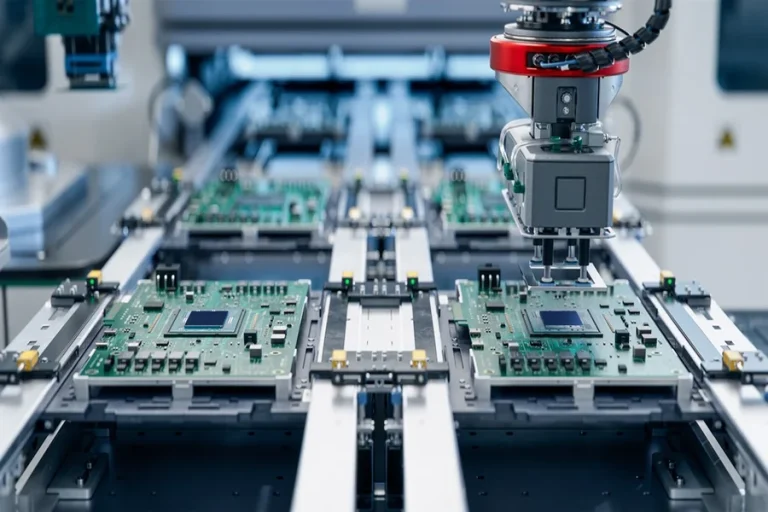
The world of industrial automation is built on a foundation of precision, reliability, and control. From robotic arms on an assembly line to the complex controllers running a power plant, every automated system depends on flawless electronic performance. At the core of this technology is the printed circuit board assembly (PCBA). Choosing the right electronic PCBA manufacturer is a critical decision for any company in the industrial sector, as the quality of these boards directly impacts operational safety, efficiency, and uptime.
The Brains Behind the Machine: The Role of PCBA in Automation
Industrial automation systems are the central nervous system of modern factories, warehouses, and processing plants. They perform repetitive tasks with incredible speed and accuracy, monitor critical processes, and ensure a safe working environment. None of this would be possible without the specialized PCBAs that control them.
These are not your average circuit boards. An industrial PCBA must function as the brain and reflexes of a machine, processing data from sensors, making split-second decisions, and sending commands to motors, actuators, and valves. Whether it’s a programmable logic controller (PLC), a motor drive, or a human-machine interface (HMI), the PCBA inside is what makes the system work.
Unique Challenges in Manufacturing for Industrial Automation
Creating PCBAs for industrial applications presents a unique set of challenges. These environments are far more demanding than a typical home or office, and the circuit boards must be built to survive and perform perfectly for years.
Extreme Environmental Conditions
Industrial facilities are tough on electronics. A PCBA must be designed and manufactured to withstand:
- Vibration and Shock: Constant movement from heavy machinery can cause standard solder joints to crack over time.
- Wide Temperature Ranges: A factory floor can experience significant temperature swings, from the cold of an unheated warehouse to the intense heat near a furnace.
- Electrical Noise: The presence of large motors and high-power equipment creates electromagnetic interference (EMI) that can disrupt sensitive electronic signals if the board is not designed and shielded properly.
- Moisture and Chemicals: Exposure to humidity, cleaning agents, or industrial chemicals can cause corrosion and lead to board failure.
The Need for Unquestionable Reliability
In industrial automation, downtime is extremely costly. A single board failure can bring an entire production line to a halt, resulting in thousands of dollars in lost productivity. In some cases, such as in safety-certified systems, a failure could even pose a risk to human life. Because of this, the manufacturing standard for industrial PCBAs is “zero-defect.” They must be built for long-term, uninterrupted operation.
Long Product Lifecycles
Unlike consumer gadgets that are replaced every few years, industrial equipment is expected to have a service life of a decade or more. A specialized PCBA manufacturer must be able to support these long lifecycles. This includes careful component selection to avoid parts that may become obsolete, as well as maintaining the capability to produce replacement boards for many years.
How a Specialized Manufacturer Delivers Industrial-Grade PCBAs
A PCBA manufacturer that focuses on industrial automation has specific processes and capabilities designed to meet these demanding requirements. They are more than just an assembler; they are a partner in building robust and reliable systems.
Robust Design and Material Selection
The process starts with a design built for durability. An experienced manufacturer provides Design for Manufacturability (DFM) analysis to ensure the layout is optimized for the industrial environment. They help select robust components rated for higher temperatures and longer lifespans. They also recommend techniques like using thicker copper traces for high-current applications and applying a conformal coating—a protective, non-conductive layer—to shield the board from moisture and contaminants.
Rigorous Testing and Quality Control
To guarantee reliability, every board must undergo extensive testing. A specialized manufacturer uses a multi-layered inspection strategy to catch any potential defect.
- Automated Optical Inspection (AOI): After assembly, high-resolution cameras scan the board to verify that every component is placed correctly and soldered properly.
- X-ray Inspection: This is used to check for hidden defects in solder joints, particularly under complex components, ensuring a solid and reliable electrical connection.
- In-Circuit Testing (ICT): The board is powered up and its circuits are electronically tested to confirm everything functions as designed.
- Burn-In Testing: Boards are often run for an extended period, sometimes at elevated temperatures, to weed out any components that might fail early in their life.
Full Traceability and Process Control
A professional industrial manufacturer maintains complete traceability for every board they produce. They can track every component back to its original source and have detailed records of the entire assembly and testing process. This level of documentation is crucial for quality assurance and is often a requirement for systems used in regulated industries.
A Partnership for Industrial Excellence
The sophisticated systems that power modern industry require a foundation of absolute reliability. This reliability is born from the quality and precision of their core electronic components. By partnering with an electronic PCBA manufacturer that understands the unique challenges of industrial automation, companies can ensure their equipment is built to last. This choice is an investment in operational efficiency, safety, and the long-term success of their automated systems.