
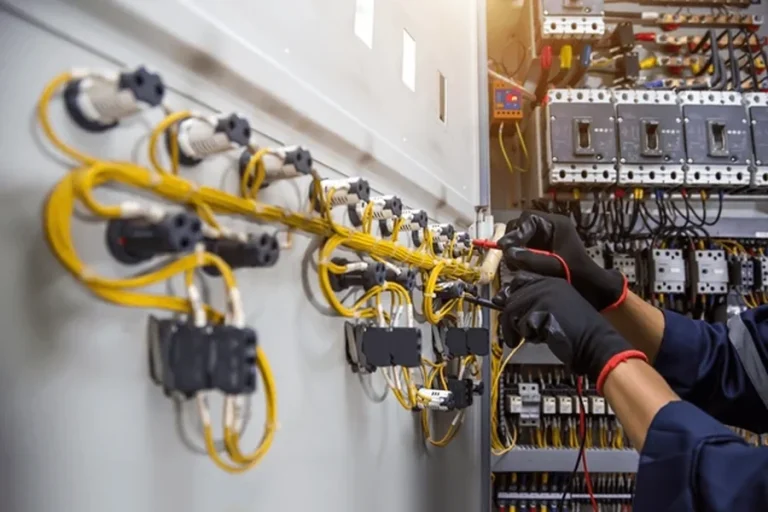
Electricity is the driving force behind nearly every modern operation, whether in residential buildings, commercial spaces, or industrial facilities. Behind the scenes, a network of instruments, equipment, and devices ensures that this flow of power is steady, safe, and efficient.
At the center of this system lies the electrical panel board for power distribution, a critical component that governs how electricity is distributed and controlled within a given structure.
The Foundation of Power Management
An electrical panel board, often referred to as a breaker panel or distribution board, serves as the control hub of an electrical supply system. Its role is to receive electricity from the main supply line and distribute it across circuits within a property. This not only ensures that power is delivered where it is required but also provides a system of protection against overloads and faults.
The design of a panel board is deliberate. It is constructed to house multiple circuit breakers or fuses, each linked to a separate electrical circuit. When a circuit becomes overloaded or short-circuited, the breaker automatically interrupts the flow of current, preventing potential damage to connected equipment and reducing the risk of fire hazards.
Distribution with Safety and Efficiency
Incorporating an electrical panel board into any building is more than a technical necessity; it is an assurance of safety and operational efficiency. By segmenting power into multiple circuits, panel boards allow the load to be evenly distributed. This prevents individual circuits from carrying excessive current, ensuring that electrical devices and appliances function properly without unnecessary strain.
Additionally, panel boards allow easy monitoring and maintenance. If a particular device or section of a building faces an electrical issue, it can be isolated by simply switching off the corresponding breaker. This makes troubleshooting and repairs more efficient, minimizing downtime and disruption.
Applications Across Different Environments
The role of an electrical panel board extends across various environments.
- Residential Settings: In homes, panel boards regulate power for lighting, heating, cooling, and household appliances. They provide a centralized point of access to manage all circuits safely.
- Commercial Spaces: Offices, retail stores, and service centers rely on panel boards to handle higher power demands. They employ advanced configurations to support computers, air conditioning systems, and communication equipment.
- Industrial Facilities: In manufacturing units or plants, panel boards are indispensable. They are deployed to manage heavy-duty machinery, control units, and other industrial instruments. Here, the boards are often customized to meet complex and high-load requirements.
Regardless of the environment, panel boards act as guardians of electrical distribution, ensuring that every connected device operates within a secure framework.
Evolving Technology in Panel Boards
Electrical systems are continually evolving, and panel boards have not remained static. Modern panel boards are designed to incorporate advanced safety features, including surge protection and ground fault interruption. Some are also built to accommodate future expansions, offering flexibility to growing businesses or households.
Energy efficiency has also become a central focus. By employing better materials, improved insulation, and smarter layouts, panel boards now contribute to reducing energy losses. This helps optimize power usage while lowering overall operational costs.
Importance of Regular Maintenance
Like any other electrical instrument, an electrical panel board requires regular inspection and upkeep. Dust accumulation, loose connections, and worn-out components can compromise performance and pose risks. Periodic checks ensure that breakers function correctly and that the panel is capable of handling the building’s power requirements. Maintenance also provides an opportunity to upgrade systems in line with evolving safety codes and technological advancements.
Partnering with Reputable Energy Providers
While the installation and maintenance of an electrical panel board are essential, choosing the right energy partners holds equal importance. Reputable energy providers bring expertise, reliability, and a commitment to safety. They ensure that the systems deployed are compliant with regulatory standards and designed to meet specific operational needs.
By partnering with such providers, businesses and homeowners benefit from enhanced efficiency, reduced risks, and long-term dependability. Trustworthy partners also offer guidance on upgrades, ensuring that panel boards and associated systems remain future-ready and capable of adapting to evolving energy demands.