Introduction
In today’s manufacturing landscape, procurement managers and engineers face a critical dilemma when sourcing high-precision gears. The challenge is twofold: suppliers often struggle to balance top-tier quality with cost control, while simultaneously contending with extended lead times that frequently exceed six weeks, jeopardizing critical project schedules. Compounding this issue are volatile material costs and a fragmented supply chain, where hidden expenses can silently consume over 25% of the total procurement budget.The root cause lies in the inherent limitations of traditional gear manufacturing. Outdated processes, disjointed production steps like separate heat treatment and inspection causing delays, and a lack of data-driven holistic optimization create these bottlenecks.
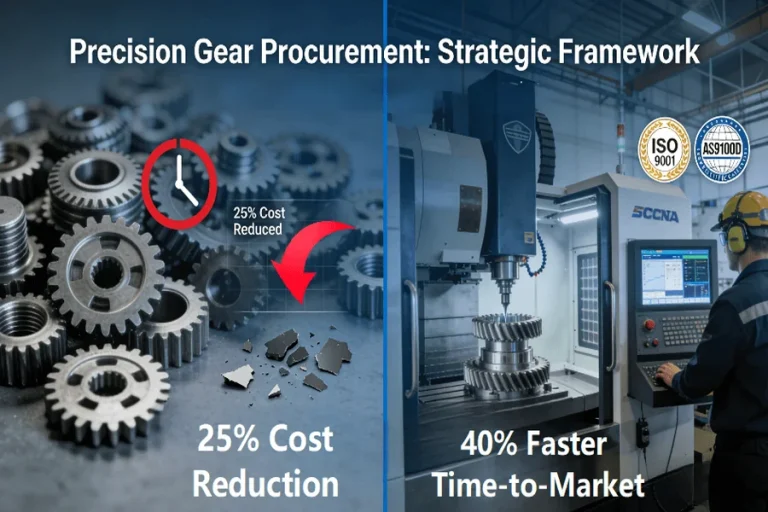
This article presents a proven, three-dimensional strategic framework that systematically tackles these challenges through process innovation, supply chain integration, and data-driven quality control. This methodology has consistently enabled manufacturers to achieve cost reductions exceeding 25% and slash delivery cycles by up to 40%, all while ensuring compliance with the most stringent international standards, such as ISO 9001 and AS9100D.
How Can Process Innovation in Gear Machining Directly Slash Unit Costs by 20%?
Achieving significant cost reduction starts at the manufacturing process level. By re-engineering core techniques, manufacturers can dramatically improve efficiency and lower the cost per unit.
1. Implementing High-Speed Hard Hobbing to Replace Traditional Grinding
A pivotal innovation is the adoption of high-speed hard hobbing. This advanced process allows for the finishing of hardened gears in a single setup, eliminating the need for secondary grinding operations. By optimizing cutting parameters and using specialized tool coatings, this method can reduce finishing cycle times by up to 40% compared to conventional grinders. The result is a direct reduction in machining hours and energy consumption, contributing significantly to the overall cost savings.
2. Optimizing Tooling Strategies for Maximum Efficiency
Tooling costs are a major component of unit cost. A strategic approach involves precise parameter optimization for coolant application, speed, and feed rates. This extends the life of each cutting insert, increasing the number of gears produced per tool from an average of 50 to over 80. Furthermore, implementing Single-Minute Exchange of Die (SMED) methodologies streamlines changeover processes. By analyzing and refining setup steps, changeover times can be slashed from 45 minutes to just 12 minutes, drastically improving equipment uptime and Overall Equipment Effectiveness (OEE), a key metric for manufacturing productivity.
3. Leveraging Advanced CAM for Optimal Material Removal
The use of sophisticated Computer-Aided Manufacturing (CAM) software is crucial for process innovation. These systems generate optimized toolpaths that maintain constant tool engagement, minimize non-cutting air movements, and enable high-efficiency trochoidal milling strategies for gear blanks. This not only shortens machining time but also reduces tool wear and improves surface finish, contributing to both cost and quality objectives.
What is the Key to Compressing Gear Delivery Cycles from 6 Weeks to 3 Weeks Without Compromising Quality?
Time compression is not about rushing but about eliminating waste and parallelizing activities. The key lies in rethinking the production flow and leveraging advanced technologies.
1. Re-engineering Production into Integrated Manufacturing Cells
The transition from a functional batch-and-queue layout to integrated production cells is transformative. By collocating turning, hobbing, and deburring machines into a seamless cell, work-in-progress (WIP) movement and queuing time are virtually eliminated. This single-piece flow approach ensures that a gear moves from raw material to near-completion without waiting, collapsing the traditional lead time from weeks to days.
2. Accelerating Secondary Processes with Advanced Heat Treatment
Heat treatment is often the longest lead-time item. Replacing traditional gas nitriding with plasma nitriding technology dramatically accelerates the process. Plasma nitriding can achieve the required case depth in approximately 8 hours, compared to 36 hours or more for conventional methods, due to its enhanced diffusion kinetics. This technological leap is a major contributor to cutting the total delivery cycle in half.
3. Synchronizing the Supply Chain and Implementing Parallel Inspection
True speed requires supply chain synchronization. Digital integration with raw material suppliers ensures JIT delivery of blanks. Concurrently, quality control is integrated into the process flow. In-process verification using on-machine probes allows for immediate feedback and correction, while final inspection occurs in parallel with packaging and shipping preparation, rather than as a sequential, time-consuming final step.
How Does Vertical Integration Uncover and Eliminate Hidden Costs in the Gear Supply Chain?
Many costs are hidden within the gaps between disparate suppliers. Vertical integration brings critical processes under one roof, creating transparency and efficiency.
- Consolidating Material Procurement for Economies of Scale: By centralizing raw material procurement for multiple projects, a manufacturer can leverage greater purchasing power, negotiating better prices and ensuring material consistency. Furthermore, collaborating with forging partners on die design optimization increases material yield, potentially reducing scrap and material cost per unit by up to 8%.
- Bringing Critical Secondary Processes In-House: Managing external vendors for heat treatment and coatings introduces logistical costs, communication delays, and quality risks. Internalizing these key processes eliminates transport costs and delays, allows for tighter process control, and reduces energy consumption through optimized scheduling. This control directly translates to lower costs and improved reliability.
- Unifying Quality Management to Reduce the Cost of Quality (COQ): A fragmented supply chain often leads to a high Cost of Quality (COQ), including costs from scrap, rework, and expedited shipping. A unified Quality Management System (QMS) applied across all integrated processes standardizes procedures, prevents defects at the source, and facilitates root-cause analysis. This systematic approach can drive the COQ down from a typical 5.2% to as low as 1.8%, a significant direct saving.A gear machining services project for transmission gears achieved a total cost saving of 33.7% through the aforementioned vertical integration strategy.
What Data-Driven Quality Control System Ensures Zero-Defect Consistency in Mass Gear Production?
For mass production, consistency is paramount. A proactive, data-driven system moves quality assurance from final inspection to real-time process control.
1. Implementing In-Process Metrology for Real-Time Monitoring
The cornerstone of modern quality is in-process metrology. Advanced sensors and on-machine probes measure critical gear characteristics like tooth profile (fα) and lead (fβ) in real-time during manufacturing. This immediate data allows for instant corrections, preventing the production of non-conforming parts and ensuring every gear is within specification from the start.
2. Utilizing Statistical Process Control (SPC) for Proactive Management
Data is useless without analysis. Statistical Process Control (SPC) charts are used to monitor the stability of key manufacturing parameters. By tracking trends and calculating process capability indices (Cpk), with a target of Cpk > 1.67, manufacturers can predict and prevent deviations before they result in defects. This shift from detection to prevention is essential for achieving defect rates in the low parts-per-million (PPM) range.
3. Establishing a Closed-Loop Corrective Action System
When a deviation occurs, a robust corrective action system is triggered. This closed-loop process ensures that the root cause is identified, effective corrective and preventive actions are implemented, and their effectiveness is verified. This continuous feedback mechanism, often underpinned by ISO 9001 principles, ensures the quality system is always improving and adapting.
How to Accurately Evaluate the True Cost-Effectiveness of a Gear Machining Supplier?
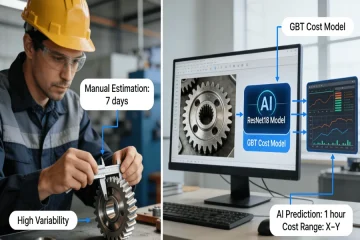
Moving beyond the sticker price is essential. A true partnership is evaluated based on Total Cost of Ownership (TCO) and technical capability.Therefore, a comprehensive quote for online custom gear machining services should transparently show these cost components and include optimization suggestions.
- Analyzing the Total Cost of Ownership (TCO) Model: A sophisticated evaluation looks at Total Cost of Ownership (TCO), which includes direct costs (material, machining, finishing) and hidden costs (logistics, quality failures, project delays). A typical TCO breakdown might be: Material (45-60%), Machining (25-35%), and Secondary Processing (15-25%). A supplier should help you understand this model.
- Identifying and Mitigating Hidden Cost Drivers: Scrutinize suppliers for potential hidden cost drivers. These include inefficient programming leading to excessive non-cutting time, suboptimal tooling strategies causing frequent breaks, and poor process control resulting in quality escapees and rework loops. A capable supplier will have data to demonstrate control over these variables.
- Prioritizing Technical Collaboration Over Price Negotiation: The most effective partnerships are built on technical collaboration. Instead of merely negotiating price, focus on a supplier’s willingness and ability to perform Design for Manufacturability (DFM) A supplier that proactively suggests design tweaks to enhance producibility, reduce cost, and improve performance is far more valuable in the long run than one offering the lowest initial quote.
What Role Do International Certifications Play in Guaranteeing Precision and Reliability?
Certifications are not just plaques on the wall; they are independent verification of a systematic approach to quality and reliability, which is crucial for high-stakes industries.
1. ISO 9001: The Foundation of a Robust Quality Management System
ISO 9001 certification provides the framework for a consistent and effective Quality Management System. It ensures that processes are defined, monitored, and continuously improved. This foundational certification demonstrates a commitment to systematic quality control that is essential for any precision manufacturing.
2. IATF 16949 and AS9100D: Sector-Specific Rigor
For automotive applications, IATF 16949 is mandatory. It builds upon ISO 9001 with enhanced requirements for product safety, defect prevention, and supply chain management. Similarly, for aerospace, AS9100D imposes rigorous standards for risk management, traceability, and configuration control. These certifications are non-negotiable for ensuring part reliability in these demanding environments.
Building Trust Through Demonstrated Compliance
Ultimately, these certifications build stakeholder trust. They provide objective evidence that the manufacturer adheres to internationally recognized best practices. For example, a manufacturer holding both IATF 16949 and AS9100D certifications, demonstrates a capability to meet the extreme demands of both automotive and aerospace clients, forming a solid foundation for a reliable partnership.
Conclusion
Achieving dramatic improvements in gear procurement is not about finding a magical solution. It is about implementing a strategic, integrated framework that synchronizes process innovation, supply chain integration, and data-driven quality control. By moving beyond traditional, siloed approaches, manufacturers can break the traditional trade-offs between cost, time, and quality. This holistic methodology is the key to unlocking sustainable competitive advantage in today’s demanding manufacturing environment.
FAQs
Q: What is the single biggest factor affecting gear machining costs?
A: Material cost is typically the largest factor, constituting 45-60% of the total expense. Significant savings come from strategic procurement and improving material utilization, while hidden costs from process inefficiencies can add another 25%, making a holistic view essential.
Q: What is the fastest possible lead time for a prototype gear order?
A: An expedited lead time of 3-5 working days is achievable. This requires strategic blank inventory, dedicated rapid-response capacity, and fully digitalized processes to eliminate delays and ensure on-time delivery.
Q: How is quality consistency maintained across high-volume production batches?
A: Consistency is ensured by a proactive, data-driven quality system. This relies on in-process gauging and Statistical Process Control (SPC) with a high Cpk (>1.67) to monitor stability and prevent deviations in real-time, ensuring minimal defect rates.
Q: Does pursuing cost reduction in gear manufacturing compromise the service life of the gears?
A: Scientifically applied cost reduction does not compromise service life; it often enhances it. True savings come from process optimization and precise heat treatment control, which improve metallurgical properties, validated through rigorous performance testing.
Q: What information is needed to get an accurate and quick quote for a custom gear project?
A: For a fast and precise quote, provide a detailed drawing or 3D CAD model, material and finishing specifications, and the projected volume. This enables a swift manufacturability analysis and a comprehensive quotation.
Author Bio
The author is a precision manufacturing expert at LS Manufacturing, a company that helps engineers and procurement professionals solve complex gear procurement challenges in automotive, aerospace, and industrial sectors. With a foundation built on certifications such as ISO 9001, IATF 16949, and AS9100D, the team is dedicated to delivering high-quality, cost-effective solutions through advanced manufacturing technologies and a collaborative partnership model.