An industrial power system is designed based on constraints—load variation, runtime, environment, and compliance. There is a clear distinction between a diesel engine and a generator; it is not an interchangeable relationship, but rather a hierarchical one. The first generates mechanical energy, and the latter refines it.
Knowing that hierarchy is where operational efficiency starts—and that is where this guide comes in
Mechanical Input
Power alone does not define a diesel engine. Its delivery is what makes it unique.
Main features:
- High-compression ignition for fuel economy
- Torque-dominated output at low RPM
- Consistent load without performance decrease
Unlike gasoline systems, diesel engines were developed for longevity. They are made to function under consistent strain without rapidly deteriorating. Uses in industrial settings include:
- Driving pumps, compressors, and heavy machinery
- Prime mover for generator sets
- Continuous output under variable mechanical load
What makes it special is torque consistency. The vast majority of industrial operations never work at a steady load. Materials and equipment cycle, creating inconsistent resistance. Diesel engines withstand these changes without stopping.
Conversion Layer: The Masterful Silent Generator
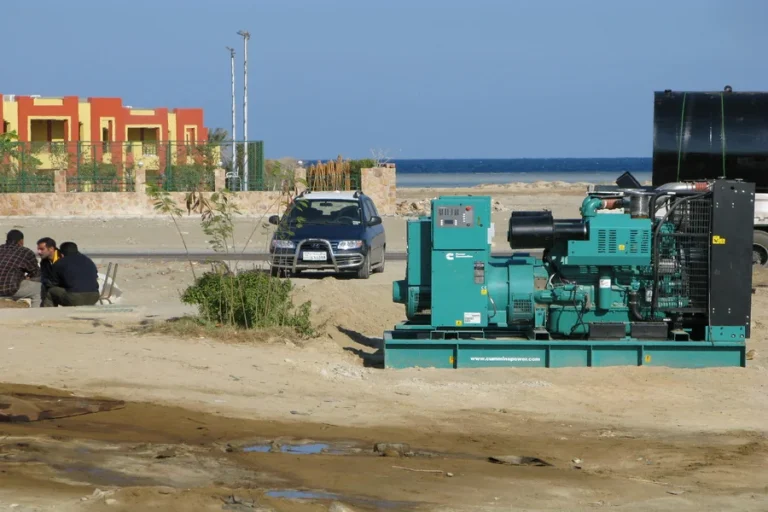
Just as mechanical power alone would be useless for most industrial operations, it needs to be converted into predictable electrical output. That is where the silent generator comes in. Main components:
- Alternator for energy conversion
- Automatic voltage regulator (AVR)
- Enclosed acoustic and thermal design
What a generator does not do is generate power. What it does is stabilize it. Unlike traditional systems, silent generators:
- Are fully enclosed
- Use sound-dampening technology
- Have a regulated airflow and exhaust
That enclosure is not a feature. It significantly changes how the unit behaves.
Load Behavior
Industrial loads never behave consistently. They spike, drop, and fluctuate. Diesel engines compensate in the following terms:
- Increasing fuel flow under load
- Maintaining constant rotational speed
- Instantaneous torque adjustment
Generators compensate electrically in terms of:
- Voltage regulation
- Frequency stabilization
- Transient handling
It is there where silent generators beat their counterparts. Voltage stability decreases equipment strain and stops shutting down operations. Failure to maintain voltage regulation leads to:
- Voltage drops
- Equipment overheating
- Control system malfunctions
This brings us to the importance of system pairing. A well-designed diesel engine paired with an underdeveloped generator will produce unstable output nonetheless.
Cooling Systems—The Unsung Performance Enhancer
The cooling design determines the system’s lifespan, efficiency, and noise.
Two common types of cooling systems:
- Air-cooling
- Water-cooling
Industrial silent generators utilize water cooling because:
- It keeps the operating temperature constant
- It reduces engine RPM (approximately 1800 RPM instead of 3600 RPM)
- It dampens noise inside the engine through coolant jackets.
Air cooling is better suited to operations with the following:
- Simplified construction
- Less expensive upfront costs
- More noise because of faster air flow
Water-cooling is more apt for
- Higher initial investment
- Longer lifespan (up to 2-4 times longer)
- Better performance at high loads
Cooling is not merely an auxiliary function. It defines how long your generator can operate effectively.
Duty Cycles and Expected Runtime
Equipment is evaluated according to duty cycles.
Diesel engines:
- Can operate continuously
- Can accommodate varied loads
- Require regular maintenance
Silent generators:
- Designed for prime or standby usage
- Sustain output throughout extended periods of work
- Designed to deliver electricity consistently
Environmental Conditions and System Specifications
Environmental factors affect the design of equipment. Industrial land-based equipment works under controlled conditions:
- Dry air
- Limited exposure
- Regulated load cycles
In contrast, maritime systems require additional modifications. Marine engine operates
- Under continuous humidity exposure
- Is exposed to saltwater corrosion
- Operates on steady load without stops
Design considerations for these include:
- Corrosion-proof materials
- Hermetically sealed electrical components
- Custom cooling and exhaust systems
In contrast to industrial engines, the marine engine is designed to operate continually at a steady rate with no changes in gears.
Efficiency Is More Than Fuel Consumption
Efficiency is often limited to fuel consumption, which is an incomplete view—actual system efficiency includes the following:
- Conversion from fuel to energy
- Energy consistency
- Energy loss during conversion
- Number of shutdowns
Diesel engines convert fuel into energy efficiently. Electricity generators introduce conversion efficiency. Silent generators minimize further energy loss through the following:
- Consistent voltage output
- No idling waste
- Load compatibility.
Integrating Silent Generators in an Industrial System
Current industrial systems hardly depend on standalone machines. The standard setup is:
- Prime mover (diesel engine)
- Conversion unit (generator)
- Automation mechanism (control system)
Sophisticated industrial systems incorporate the following:
- Multiple generators for load sharing
- Automatic transfer switches (ATS)
- Monitoring mechanisms
Silent generators can easily be integrated into such systems because they generate controlled outputs without causing noise pollution.
Causes of Failure and Detection Mechanism
Identifying possible failure is essential. Typical failure causes in diesel engines:
- Fuel contamination
- Lubrication failure
- Engine overheating
Possible failure in generators:
- Voltage fluctuation
- Alternator fatigue
- Control panel malfunction
In marine applications, the risks of failures increase owing to isolation. Detection of fault becomes important for safety and continuity. Fault detection is currently accomplished through:
- Sensor monitoring
- Statistical data collection
- Predictive analysis models
Conclusion
Current industrial power systems consist of several layers.
- The diesel engine supplies power.
- The silent generator filters the power supply.
- The marine engine modifies the diesel engine’s energy output for harsh operating conditions.
Efficiency is achieved when each component is applied to its intended purpose. Misalignment results in inefficiency; however, proper integration produces efficiency.